The Krugerrand
The price of a South African Krugerrand has skyrocketed in recent years as the price of gold surged on the back of elevated uncertainty in financial markets, with a one-ounce proof now going for over R122,500.
Non-proof Krugerrands are currently trading for over R81,000. This is over double the price of the same coin just two years ago.
Krugerrands are the most traded form of gold in the world, with the price of a one-ounce coin tracked by financial institutions and traded as a proxy for the precious metal.
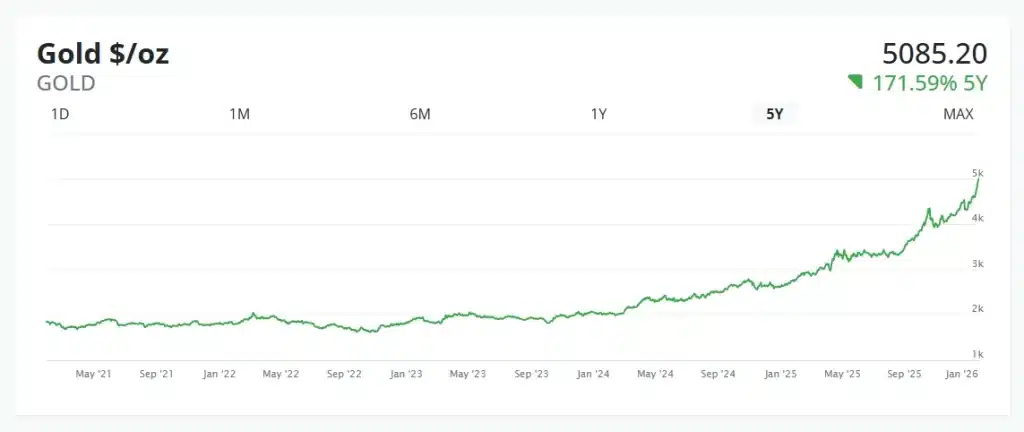
As a result, the value of a Krugerrand has surged along with the record rally in the price of gold, with the precious metal surging by over 170% in the past five years.
This rally has been driven in the short-term by investors flocking to safe-haven assets amid elevated volatility and uncertainty in financial markets as United States President Donald Trump seeks to reorder global trade.
Typically, amid elevated uncertainty and volatility, investors flock to US Treasury bills and other American-based assets for security in the world’s most liquid financial market.
However, this time around, investors have looked elsewhere for safety due to the historic ‘safe haven’ status of US assets being eroded by Trump’s policy swings and the declining financial health of the US government.
Thus, they have searched for safety and stability in hard commodities, particularly gold and other precious metals, as they tend to hold their value well over time.
This short-term boost has been coupled with longer-term factors that have boosted the price of gold, particularly the buying up of the precious metal by central banks to diversify their reserves away from the US dollar.
The buying of gold by central banks is key, as these are typically price-insensitive buyers, looking to diversify their reserves regardless of the cost.
This enables other investors to pile into the precious metal as they know that there will be a buyer willing to pay more for gold than they have.
Central banks have increased their efforts to diversify their reserves following the weaponisation of the US dollar over the past decade.
The United States has sought to use the power conferred by its status as the global reserve currency to sanction nations and individuals who oppose its interests.
A particularly stark example of this was the heavy sanctions placed on Russia following its invasion of Ukraine.
This has led central banks, particularly the People’s Bank of China, to buy gold in large quantities to reduce their exposure to the dollar.
As the price of gold has risen, the metal has received more attention from individual investors and asset managers, with billions of dollars flowing into funds that hold gold as an asset.
The rise in the price of gold in the past five years can be seen in the graph below.
The Krugerrand
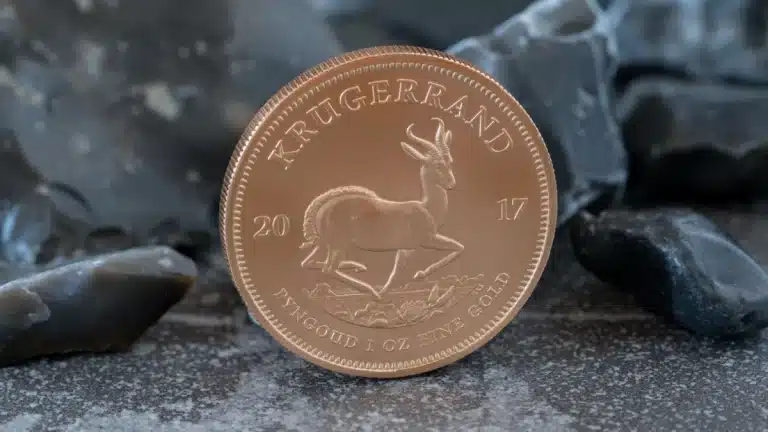
First minted on 3 July 1967, the Krugerrand has become the most liquid form of gold in the world, traded in financial markets and personally as a proxy for the precious metal.
While the coin has become immensely valuable due to the price of gold and its inherent rarity, it was first minted to help market South African gold globally and increase trading in the precious metal.
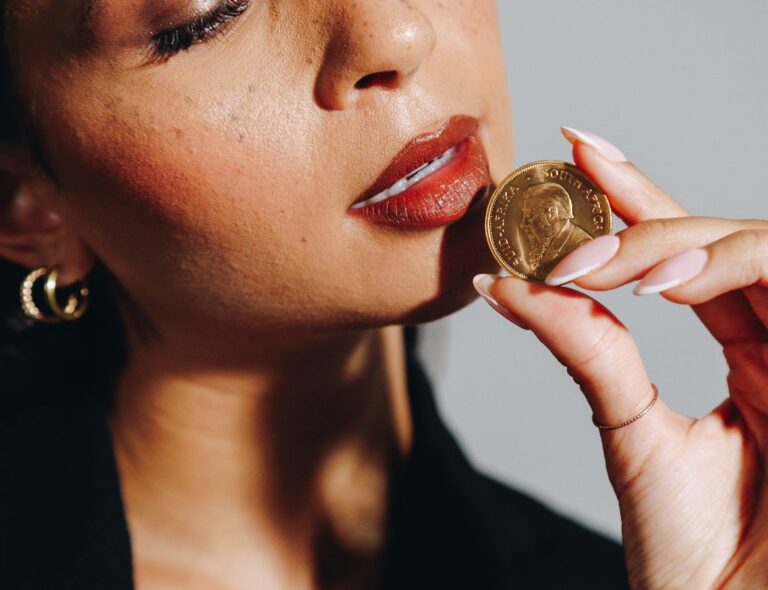
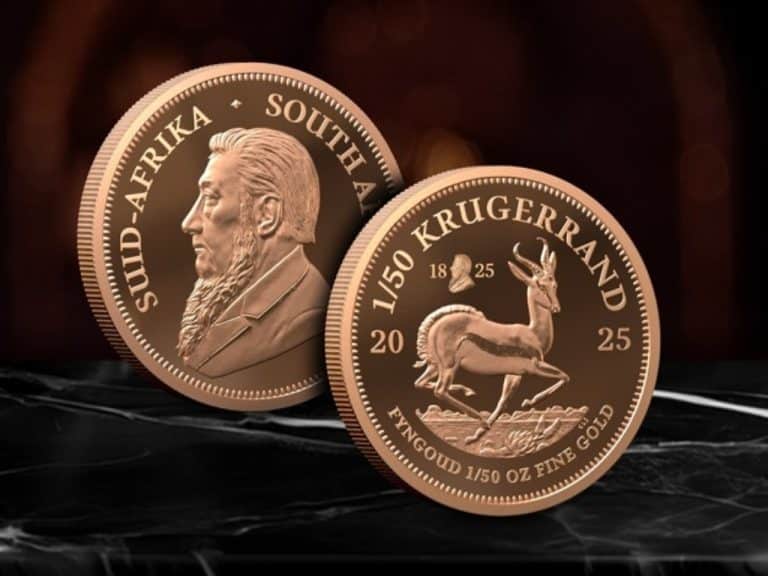
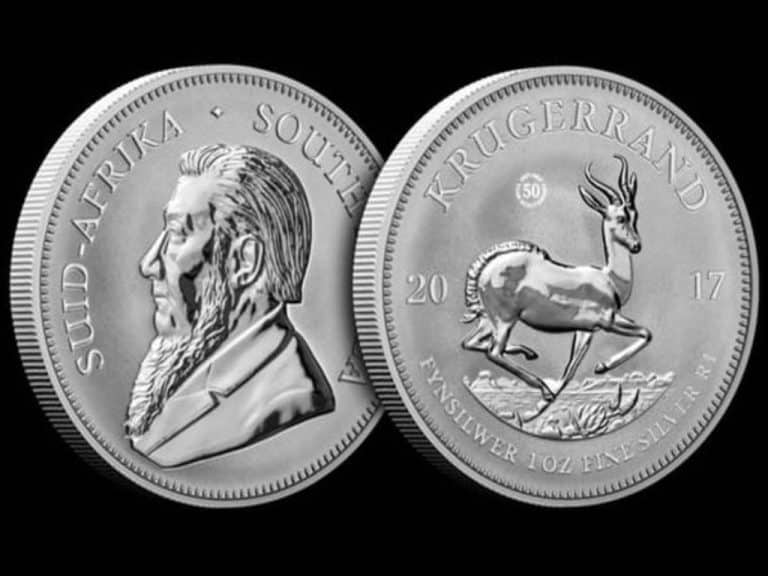
The Krugerrand gets its name from the back side of the coin, which bears the face of Boer statesman Paul Kruger, four-term president of the old South African Republic.
The reverse depicts a springbok, South Africa’s national animal. This image was previously used on the reverse of the earlier South African five shillings and 50-cent coins.
The coin, due to its relative ease of trading between individuals and investors, became a global phenomenon almost overnight.
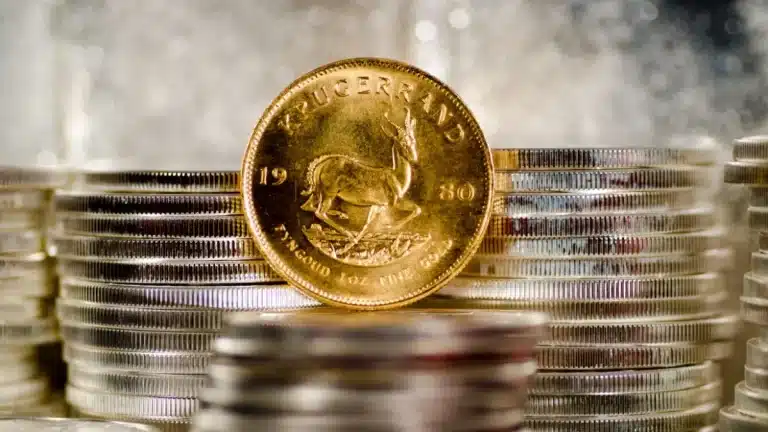
By 1980, the Krugerrand accounted for more than 90% of the global gold coin market and was the number one choice for most investors buying gold.
The coin was not spared the consequences of Apartheid, with its popularity declining in the late 1980s and early 1990s due to its association with the Apartheid government.
However, it quickly regained its popularity because there was no equivalent coin in circulation, as Krugerrands actually contain gold.
The American Gold Eagle, intended to be a Krugerrand equivalent of the United States, has largely symbolic value and is worth far less than its metal content.
The only significant historical parallel is the British gold sovereign, which likewise bears no face value but is legally recognised as one pound sterling.
For the coin’s 50th anniversary in 2017, the South African Mint revealed that over 53 million troy ounces of gold Krugerrands have been sold since their launch. This equates to around 60 million individual coins.
The coins were first sold as only one-ounce variants, with the Mint gradually introducing smaller denominations in the 1980s and 1990s. The silver Krugerrand was launched in 2017 to commemorate the 50th anniversary.
Krugerrands are now available in one-ounce, half-ounce, quarter-ounce, and one-tenth-ounce variations alongside one-ounce silver coins. Limited numbers of two-ounce gold Krugerrands are also available.
Krugerrand Images
Click here to read the original article.